2024 || Design Research Project
Mentor: Baharati Bahar, Oscar Tamico, Kristina Anderson
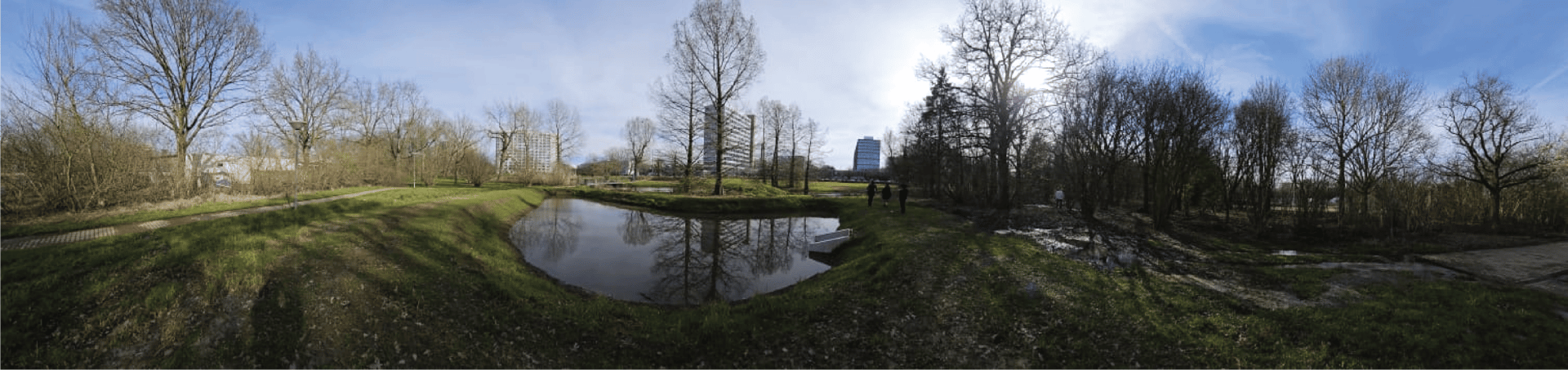
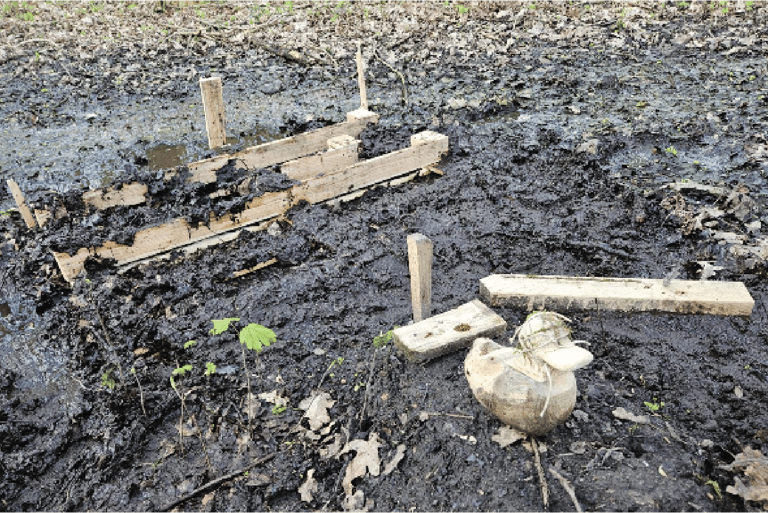
The Abies is the name given to people who once occupied the areas that are now the TU/e campus, derived from the material they seemed to interact with most: fir (Abies) pallet wood. This project uses material a speculative design research project that reconstructs imagined rituals of a past group, the “Abies,” to question how we relate to other species, death, and the TU/e campus as a shared place. Through hands-on work with waste pallets, a deceased mallard, and local organisms, the project develops artifacts like a floating “Duckland,” a pallet-wood coffin, and a moss-covered effigy to explore how material—especially dead matter—can mediate care, grief, and multispecies coexistence.
The Memorial: Material exploration
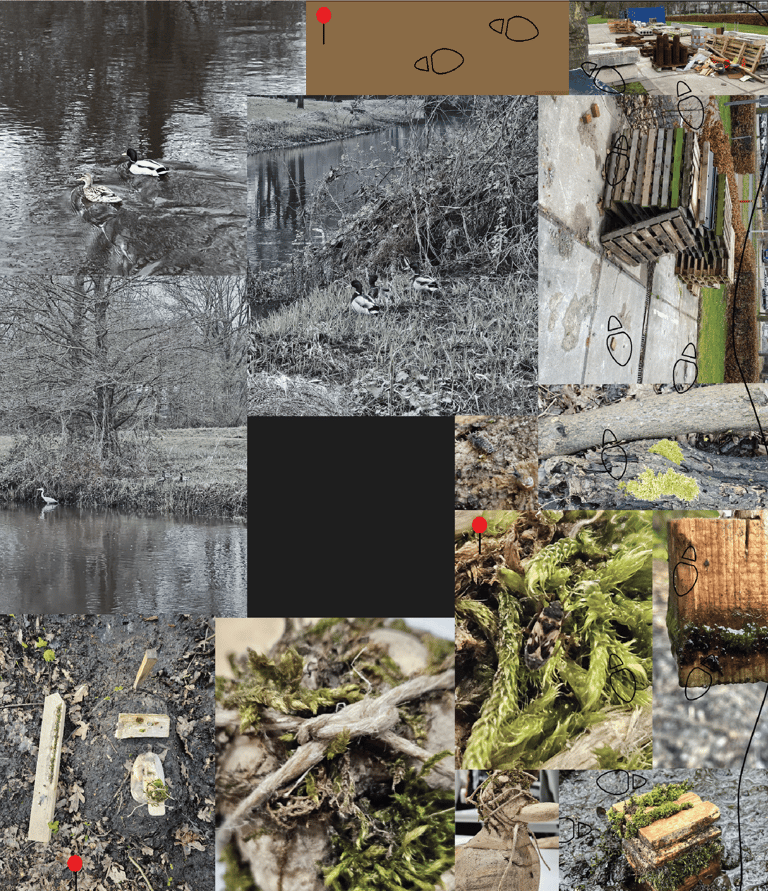
Campus walks uncovered abundant waste pallets and nonhuman activity contrasting separate human spaces, but sparked curiosity about what new insights would unravel when designing tfrom the perspective of materials, living nonhuman species and the environment. What happens to nonhuman deaths like the mallard’s, and how can material tinkering build knowledge of species relations, grief, and place?
Why?
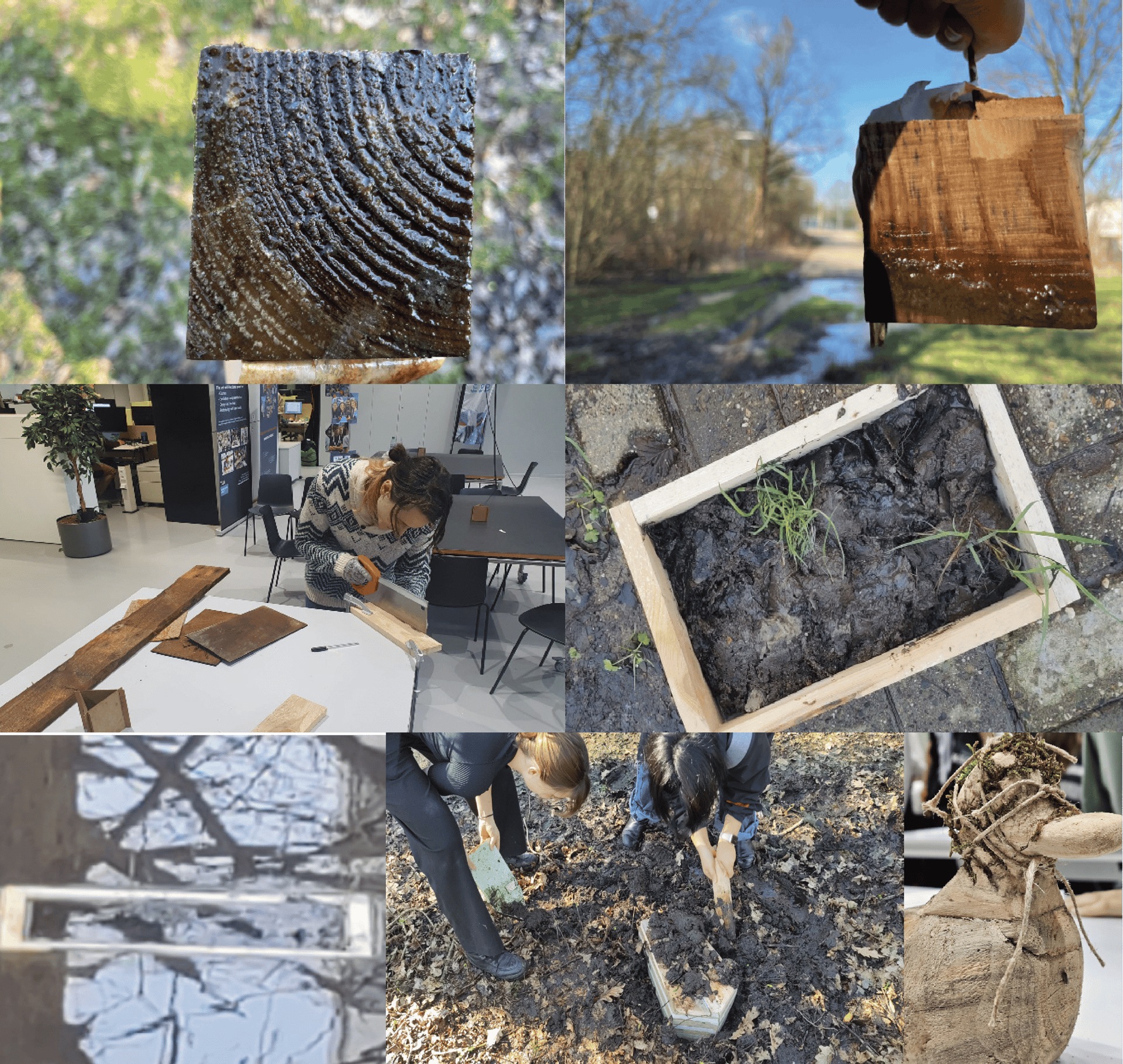
The project was scoped as a small‑scale, site‑specific design research on the TU/e campus, limited to found waste materials, the mallard’s body, and the immediate pond ecosystem over a defined study period. Within this frame, we focused on iterative making (Duckland, coffin, effigy), documentation, and public exhibition to explore how designed artifacts can trigger, hold, and transform multispecies relations, rather than aiming for long‑term ecological impact or generalisable solutions.
Scope
My approach combined material‑driven tinkering with autoethnographic observation and continuous reflection in three iterative phases: Exploration (campus scavenging, pallet experiments, site selection); Making (building Duckland, coffin, effigy to process grief and care); and Results (observing emergent ecosystems, archeological exhibition). This more‑than‑human method treated materials and nonhumans as active collaborators, using photography, notes, and rituals to document relational changes rather than predefined outcomes.
Approach
Results
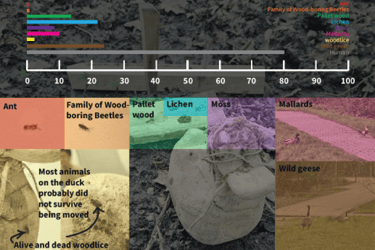
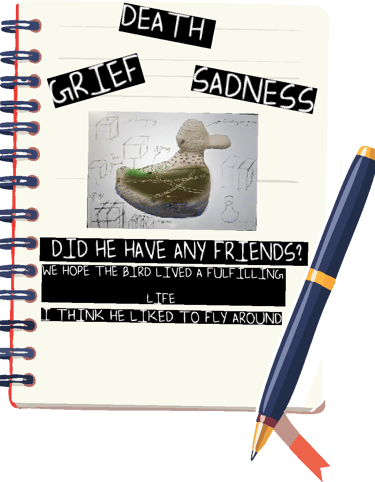
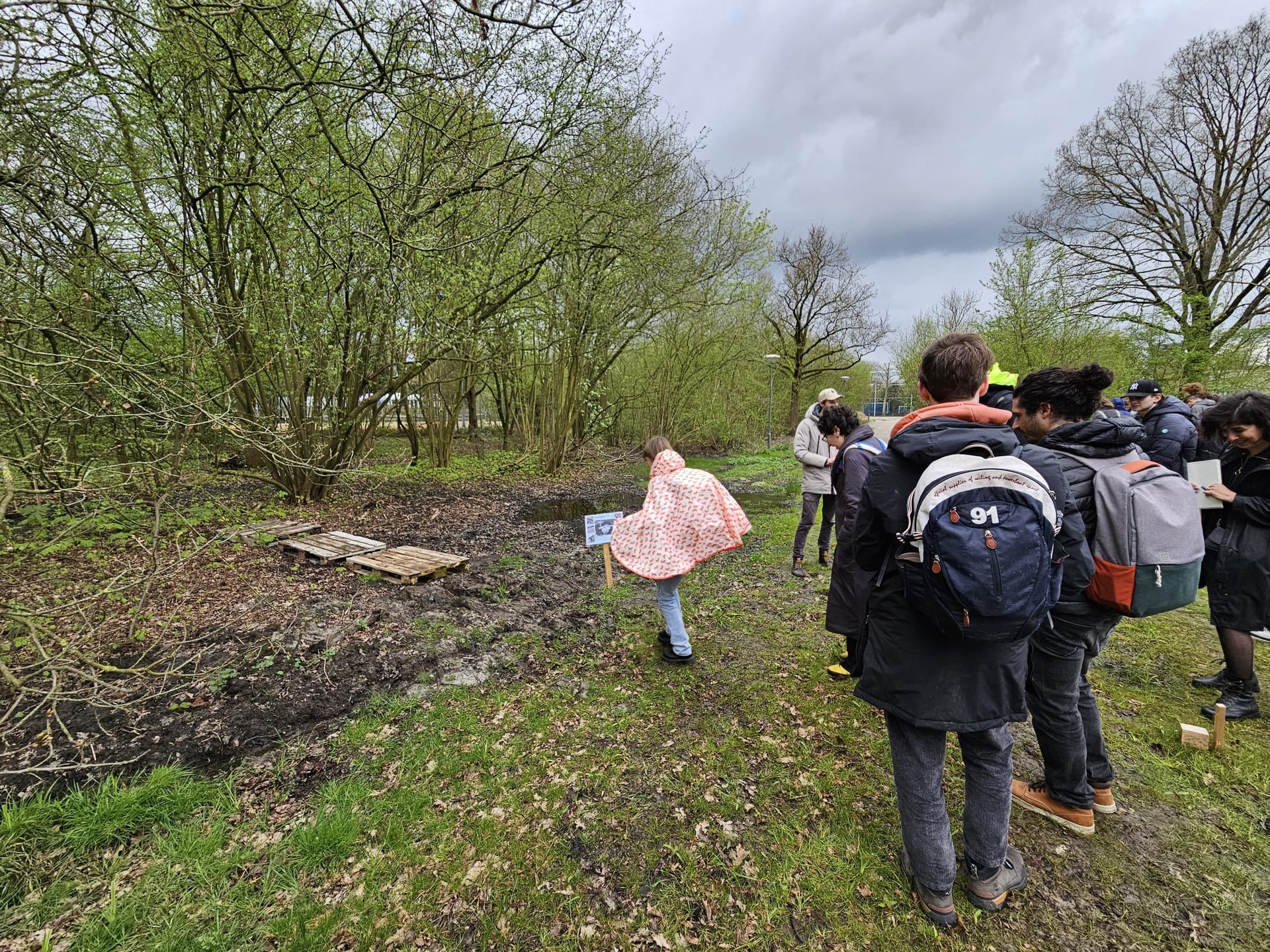
Reconstructing these insights into a visual highlights the newfound look at time not in human minutes and hours, but as a relation (in)between humans and non-humans. The final presentation was to create this confrontation of ideas and insights, by opening our research and archeological dig site to the public.